

2026 Heatwave: How Can Tomato Growers Protect Their Crops in a Warming Climate ?
42°C outside. More than 38°C inside some greenhouses. In the summer of 2026, tomato growers had to contend with temperatures that pushed crops to their limits.
Four growers share what they observed on their farms: lower yields, fruit-set issues, fruit quality problems, but also increasingly challenging working conditions. Their experiences point to the same conclusion: as extreme heat events become more frequent, controlling the greenhouse climate is becoming a key production issue in its own right.
In a world of limited resources, the challenge is to find solutions that are both efficient and sustainable.
Opening vents, applying greenhouse shading coatings, fogging, adjusting irrigation, changing working hours… Solutions exist. But beyond their respective advantages and drawbacks, they all come at a cost.
To assess the real impact of this exceptionally hot summer — one that may unfortunately become the new normal — we met four passionate growers: Jérôme Dublé, Serge Figuet, Vincent Cestier and Frédéric Garcia
At Provence Alpilles: Heat Directly Impacts Yield and Quality
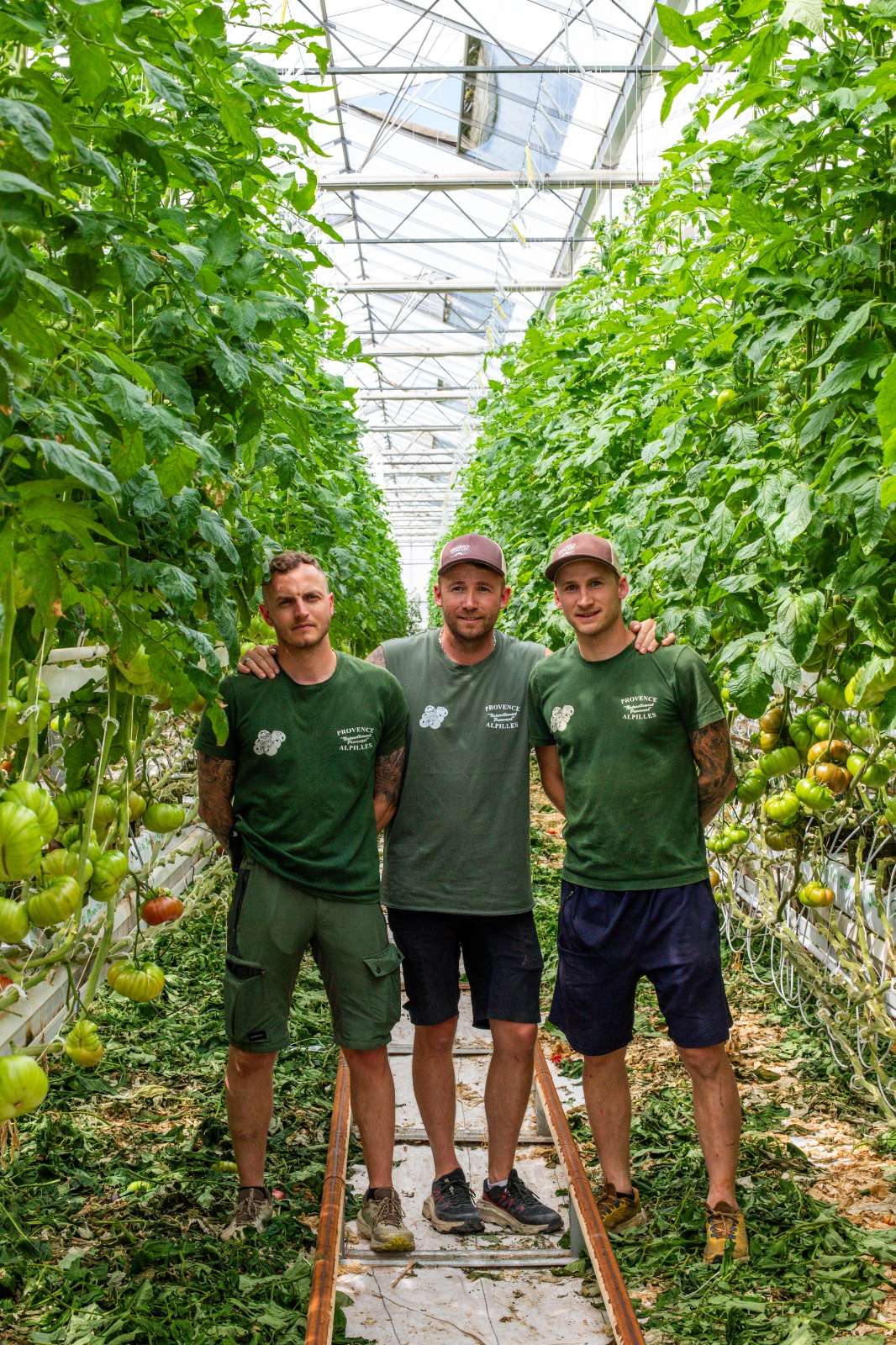
Jérôme mainly grows traditional tomato varieties, including beefsteak, red and yellow ribbed tomatoes, as well as vine tomatoes. His farm comprises approximately 6 hectares of Venlo greenhouses and 1 hectare of multi-span greenhouse equipped with an inflatable double-layer covering. Some varieties were particularly hard hit by the season.
For beefsteak tomatoes, Jérôme estimates that he lost the equivalent of around 1.5 trusses during the first period. Quality issues then emerged, including calcium deficiency, blossom-end rot and fruit cracking.
Overall, losses reached as much as 5 to 6 kg/m², representing approximately 15% of production.
The black tomato variety provides another indication of the season’s impact: production fell from 381 tonnes in 2025 to 346 tonnes in 2026, a decline of around 9 %.
To mitigate the effects of the heat, the farm increased greenhouse shading, using as many as 18 20-litre containers of ReduSol.
Maintaining sufficient foliage also became a priority. Plants were kept as tall as possible, and the lowering schedule was adjusted: plants were lowered every 20 cm instead of the usual 40 cm.
These measures helped limit the damage, but could not eliminate the farm’s dependence on outdoor conditions.
For Jérôme, the solution will therefore have to be multifaceted: selecting more heat-tolerant, vegetative varieties while also upgrading production facilities.
He is now considering gradually converting his Venlo greenhouses to a semi-closed system.
“If I were building a new greenhouse today, DPG would be a very credible option.”
At SCEA Coccinelle: When Fogging Reaches Its Limits
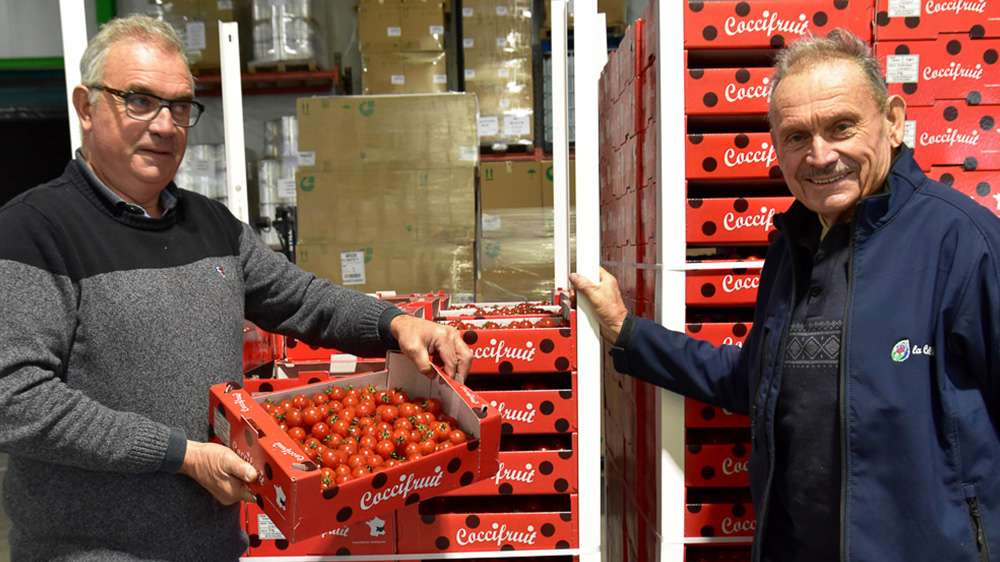
Serge Figuet grows several types of tomatoes, including cherry, cocktail and traditional varieties, across several greenhouse structures covering several hectares.
In his conventional greenhouses, the summer of 2026 caused flower loss, with cherry tomato production estimated to be 1 to 2 kg/m² lower than in 2025.
To mitigate the effects of the heat, the teams focused on maintaining more leaf area and making greater use of fogging.
When temperatures exceeded 28°C or humidity dropped below 75%, the FOG system could operate for more than 20 seconds every 30 seconds.
Ventilation was also limited to around 60% to avoid bringing hot, dry outside air into the greenhouse too quickly and to allow the fogging system to remain effective.
The aim was to maintain a sufficiently enclosed environment to make full use of evaporative cooling.
However, this strategy has its limits. When outdoor humidity becomes too high, evaporative cooling loses efficiency. Conversely, when the outside air is extremely hot and dry, opening the vents further simply brings that heat directly into the greenhouse.
From a human perspective, working hours had already been shifted several years ago, with workdays concentrated during the coolest hours.
In the longer term, Serge is also considering semi-closed greenhouse technology, together with the gradual conversion of his existing facilities.
Two Greenhouses, Two Generations: At Vincent Cestier’s Farm, the Comparison Is Clear

Vincent’s farm comprises 5 hectares of glasshouses. Of these, 1.7 hectares consist of Richel semi-closed greenhouses installed in 2020. The remaining 3.3 hectares are older greenhouses, with gutter heights ranging from 4.30 to 5 metres.
The difference in design becomes particularly apparent when temperatures rise. With an outdoor temperature of 35°C, Vincent can keep the temperature at around 28 °C dans semi-closed greenhouse technology. In a conventional greenhouse, it reaches approximately 34°C.
A six-degree difference. For a tomato plant, that can make a major difference. « La plante souffre moins », résume en substance le producteur, qui constate également une pression beaucoup plus faible liée à l’humidité dans semi-closed greenhouse technology.
The difference is reflected in yields. For cherry tomatoes, Vincent estimates that production can be 30 to 40% higher dans semi-closed greenhouse technology par rapport aux installations plus anciennes, selon les situations.
By contrast, the conventional greenhouses were much more affected by the summer of 2026, with flowering and fruit-set issues, reduced vegetation, green or yellow shoulders, calcium deficiency, blossom-end rot and fruit cracking.
For beefsteak tomatoes, losses reached as much as 6 to 7 kg/m².
Dans semi-closed greenhouse technology, l’impact sur la tomate cerise est estimé à seulement 1 to 2 kg/m².
For Vincent Cestier, the issue therefore goes beyond protecting crops from individual heatwaves.
The objective is to have a production system capable of maintaining the conditions the plant needs, even when the outdoor climate becomes unpredictable.
This approach led him to begin upgrading 10,000 m² of existing greenhouse area in 2026.
“Despite the significant investment, we believe we can achieve a three-year ROI. By making use of equipment that has already been depreciated, we can significantly improve profitability. We are fortunate to have a greenhouse with a height of 6.30 metres. In my view, for a semi-closed greenhouse to operate properly, 6 metres is the minimum. We must remember that the climate in a semi-closed greenhouse is managed from the bottom upwards.”
Starting from scratch is not always possible — or desirable.
Producing more on land that is already available is also a way of addressing increasing pressure on land availability.
For Vincent Cestier, this transition also has a generational dimension: “The future will be shaped by the younger generation.”
In Mauguio: 42°C Outside… and a Very Different Story Inside the Greenhouse
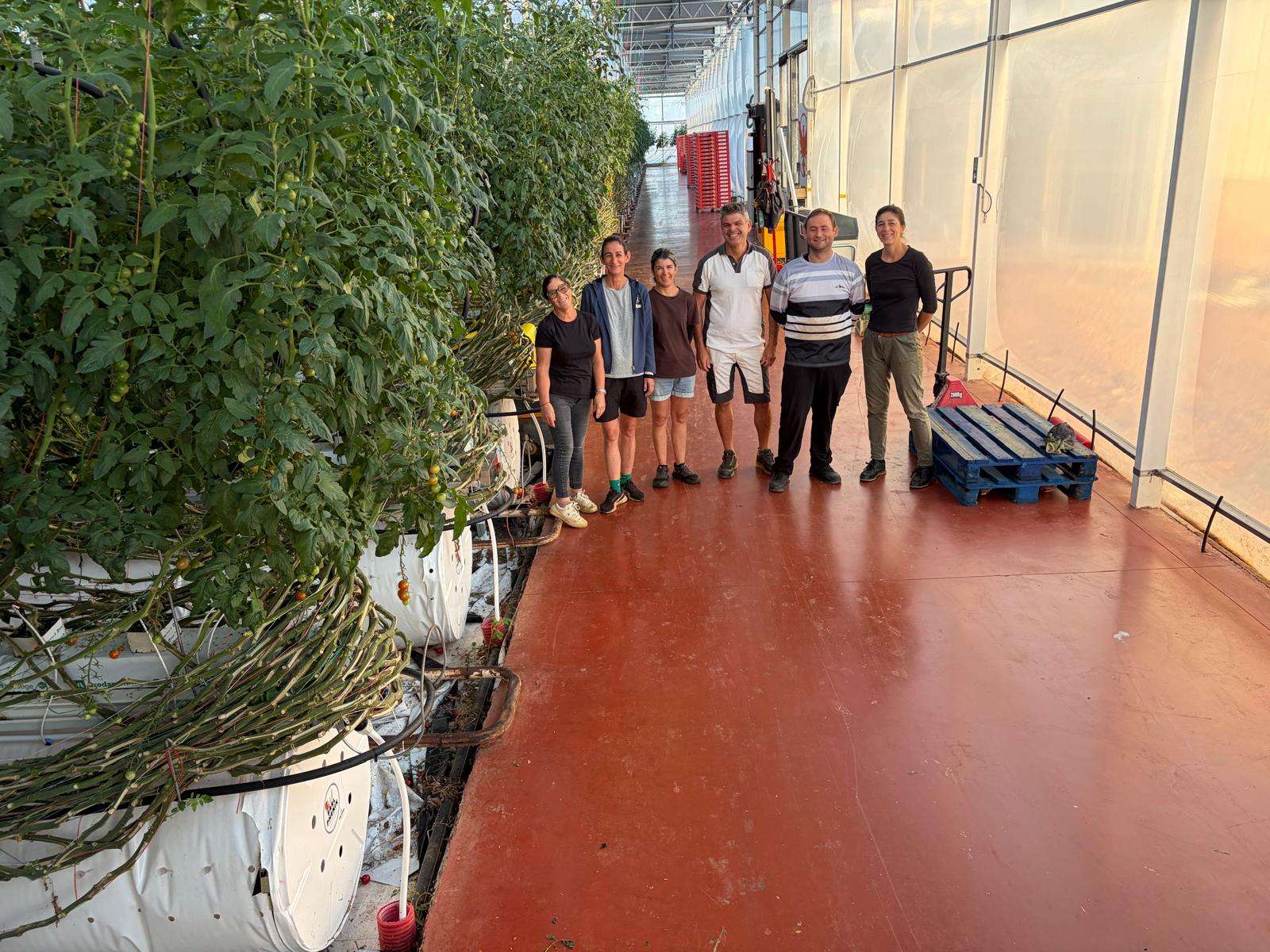
In Mauguio, Frédéric Garcia mainly grows cherry tomatoes, which account for approximately 80% of his production, along with beefsteak tomatoes.
His one-hectare greenhouse is a semi-closed structure with an inflatable double-layer covering, a 6-metre gutter height, suspended gutters, low-temperature heating, and a water recovery and recycling system.
When a heatwave strikes, the difference is immediately measurable: 42°C outside with just 20% relative humidity. Inside, the temperature rises above 30°C, but relative humidity remains at around 60%.
Of course, the greenhouse cannot turn a scorching summer day into spring-like conditions. But it can maintain an environment that is considerably more favourable to the crop.
At Frédéric Garcia’s farm, the aim is to maintain maximum average temperatures of around 23°C for beefsteak tomatoes and 25°C for cherry tomatoes, while limiting temperature peaks.
And the results appear to support his approach. By week 35, Toce production had already reached 35 kg/m², with a projected end-of-season yield of 48 kg/m², compared with 39.6 kg/m² in 2025.
For beefsteak tomatoes, production had reached 52 kg/m² at the same point, with an end-of-season forecast of 70 kg/m², compared with 69 kg/m² the previous year.
Another figure stands out: by 1 September, cherry tomato production had reached 36 kg/m², with a target of 50 kg/m² by 15 December. The farm’s previous record was 45 kg/m².
Despite the extreme temperatures, there was no major drop in production, no significant calcium-deficiency issues and no notable impact on fruit quality.
For the grower, the conclusions therefore extend well beyond the 2026 season. “This summer’s experience confirmed that I made the right choice with this greenhouse.”
So much so that he is already considering building a second greenhouse based on the same model. In the longer term, Frédéric is also considering integrating a heat pump, which could be used for night-time dehumidification while further reducing the carbon footprint of winter heating.
Shading, Fogging and Ventilation: How Far Can We Go?
Growers are not powerless in the face of extreme heat. But there is no silver bullet.
Shading coatings reduce incoming solar radiation, but they also reduce the amount of light available to the plant.
Fogging can lower temperatures, but its capacity is limited if growers want to avoid increasing the risk of fungal and bacterial diseases. Managing ventilation alongside the frequency and intensity of fogging is therefore a delicate balancing act.
Ventilation can remove heat from the greenhouse. But when it is 40°C outside, it can also bring that hot, dry air directly inside.
Quant à l’irrigation et à la gestion de la végétation, elles permettent d’accompagner la plante pour qu’elle crée son propre climat par la transpiration. Mais dès que les températures extérieures dépassent 33 à 34°C, cela ne suffit plus.
The summer of 2026 highlighted a simple reality: the more intense heat events become, the more the solutions designed to compensate for outdoor climatic conditions reach their limits.
And just a few degrees can have very tangible consequences: less foliage, fewer flowers, disrupted fruit set, more cracked fruit and blossom-end rot — and ultimately, fewer kilograms of tomatoes.
Semi-Closed Greenhouses: From Reacting to Controlling
This is probably where the main difference between the systems lies.
In a conventional greenhouse, growers have to work with the outdoor climate. They open and close vents, ventilate, fog, apply shading coatings and adapt their growing practices in an attempt to maintain the best possible conditions.
With a semi-closed greenhouse, the approach changes. Instead of simply reacting to outdoor conditions, growers gain much greater control over the indoor climate.
Frédéric Garcia’s example is particularly striking: 42°C and 20% relative humidity outside, compared with 29°C and around 65% relative humidity at plant-head level inside the greenhouse.
Vincent Cestier reports a similar result: 35 °C dehors, environ 28 °C dans semi-closed greenhouse technology, contre près de 34°C dans la serre classique.
And the difference is not only about the plants. It also affects the people working inside the greenhouses.
During heatwaves, some growers have had to bring working hours forward to avoid the hottest part of the day. Very early working schedules have been tested, sometimes requiring a compromise between employee comfort, production requirements and customer orders.
Climate control is therefore becoming as much a human issue as an agronomic one.
Retrofitting: Upgrading Existing Greenhouses Rather Than Starting from Scratch
Does improving climate performance necessarily mean building an entirely new greenhouse? Not necessarily.
Vincent Cestier’s experience demonstrates another possible approach: upgrading existing facilities.
This strategy also reflects a practical reality. In many regions, finding new plots of land that are sufficiently large, accessible and suitable for greenhouse production is becoming increasingly difficult.
Retrofitting could therefore become one of the key drivers of the industry’s transition, improving performance without necessarily increasing the production footprint. Unfortunately, the number of greenhouses suitable for such upgrades is limited, as they generally require a minimum ridge height of 6 to 7 metres.
Beyond financial considerations, modernising growing methods must also address the need to decarbonise production so that the sector does not further contribute to climate change. Vincent Cestier and Jérôme Dublé both mentioned the use of heat pumps as an alternative to gas boilers or cogeneration systems.
At Frédéric Garcia’s farm in Mauguio, the integration of photovoltaic panels has reduced the electricity bill by 50%, en fournissant aux ventilateurs de semi-closed greenhouse technology une énergie renouvelable et décarbonée.
As a general rule, “the more sunshine there is, the greater the cooling demand — and the greater the electricity production.” The two technologies therefore work in synergy.
© RICHEL Group — All rights reserved.
Article written by Brice Richel & Marion Laubépin.
Any reproduction, representation or distribution, in whole or in part, of this content without the prior authorisation of RICHEL Group is prohibited.